
Salvador Dalí…Revealed!
Magnificent oil painter, megalomaniac, devoted husband, exquisite jeweler, bizarre film creator, sculptor, narcissist, multi-millionaire…
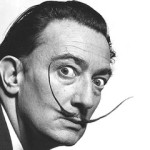
SALVADOR DALÍ
1904-1989
Dalí: “I am the first to be surprised and often terrified by the images I see appear upon my canvas.”
The surreal art world exploded with the arrival of Salvador Dalí in Paris in 1926. Calling his paintings “hand-painted dream landscapes,” Dalí painted streams of consciousness, intense feelings and above all, his dreams.
PAINTING
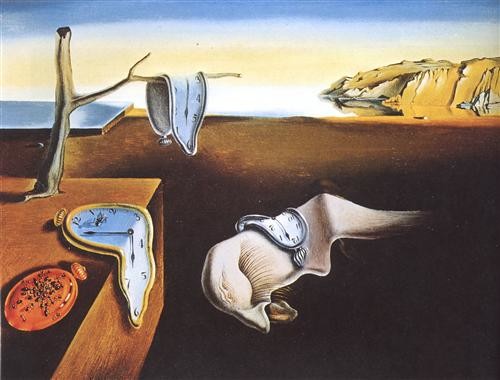
The Persistence of Memory, 1931
Salvador Dalí
MOMA, New York City
Some art scholars believe that Dalí’s melting clocks may symbolize Albert Einstein’s groundbreaking theory of relativity, a new and revolutionary idea back in the culture of the 1930’s. Through the theory of relativity, Einstein proposed a new concept of time as being relative and complex–not something fixed and easily tracked with as crude a gadget as a pocket watch. Time is melting.
SCULPTURE
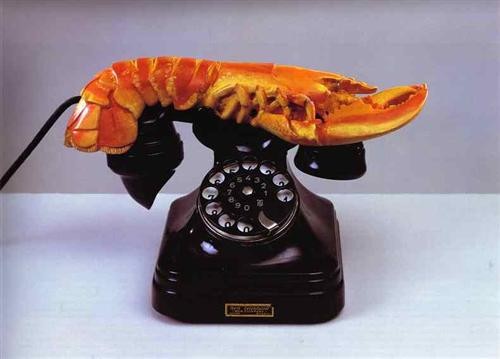
Lobster Telephone, 1936
Painted plaster, plastic, and mixed media
Tate Museum, London
The Lobster Telephone is one of Dalí’s most startling and unsettling creations. The simple placement of two unrelated objects together – a lobster on a traditional phone receiver – turns the everyday device into something surreal, making it strange but fascinating. The telephone works, but would you pick it up?!
JEWELRY
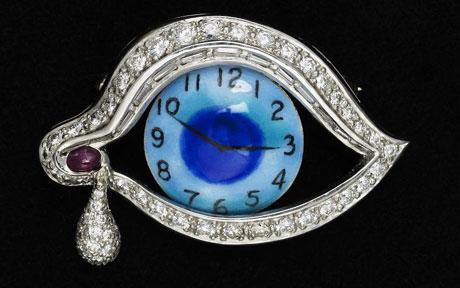
Eye of Time brooch, 1949
The Gala – Salvador Dalí Foundation
Theatre-Museum of Figueres, Catalonia, Spain
With his wicked sense of humor and desire to baffle his public completely, Dalí designed wildly imaginative jewelry and very fine jewelry indeed. A watch is set with a ruby, diamonds and enamel. The eye is a finely crafted Swiss timepiece.
Salvador Dalí: “Every morning upon awakening, I experience a supreme pleasure: that of being Salvador Dalí, and I ask myself, wonderstruck, what prodigious thing will he do today, this Salvador Dalí.”
Video: The Chaos of Salvador Dalí. Three minutes of Dalí, his art and escapades, narrated by Robert Foxworth, award winning actor and director. Click here if you are unable to view the video
Andy Warhol…Why Is He An Important Artist?
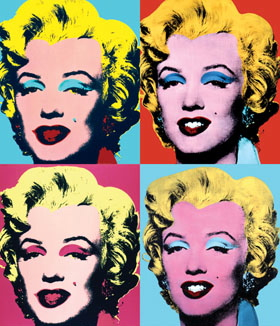
Marilyn Monroe, 1962
Andy Warhol
Andy Warhol painted icons. He painted Marilyn Monroe only after she took her own life. These images deliver a big punch. Mortality stares us in the face…Marilyn’s mortality and our own.
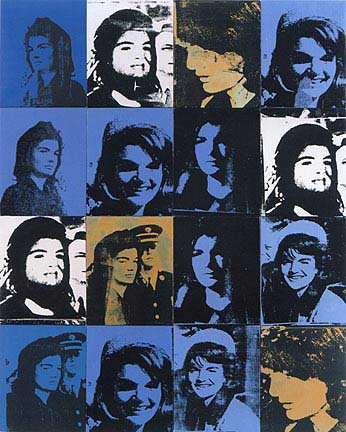
Jackie, 1964
Andy Warhol
Andy Warhol painted history in the making. He uses boxes of silk-screened photographs to record Jackie Kennedy’s courageous encounter with death.
Love him or hate him, Andy Warhol was just the latest in the long line of artists documenting our times.
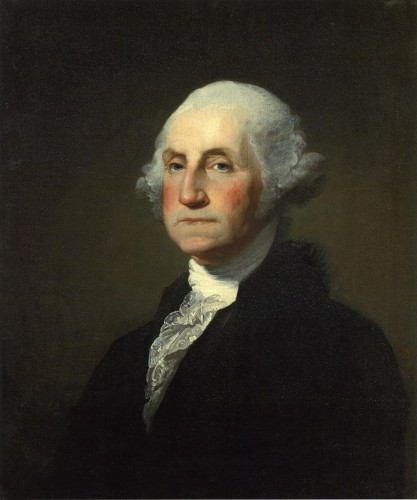
Portrait of George Washington, 1797
Gilbert Stuart
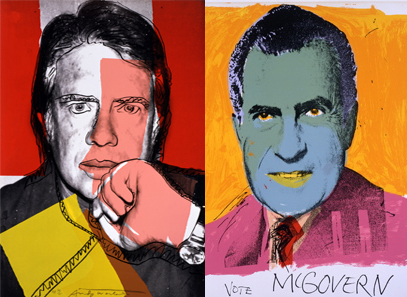
Jimmy Carter, 1976 and Richard Nixon, 1972
Andy Warhol
Warhol presents these presidential images in wild colors. They are silk-screened, an ancient method of print-making using stencils and ink on silk. Many of his works are huge in size.
Derrick Cartwright, Ph.D., states, “What I think is most essential about Warhol was his canniness in identifying images from the media, repeating them and recirculating them as art before many others recognized them as history.”
The colors, the odd blurring of lines, the uncompromising images startle us.
We, the viewers, first see Andy Warhol’s art. Then we experience history, our own history.
Watch Andy Warhol in Action! Click here if unable to view the video.
Dark Moments…Great Painters
Ever wondered why we are fascinated and confused by beautiful paintings that have ominous images?
Brain researchers in the field of Neuroscience have increasingly turned their eyes on art in an effort to understand how we see these works of art.
There is a deep portion of the brain, the amygdala, which triggers BOTH negative & positive emotions. So when we see a frightening image surrounded by beautiful bright complimentary color, the brain is perturbed. We hate it but we love it! What’s a brain to do?!
Paul Gauguin and Egon Schiele perhaps unconsciously combined the beautiful with the sinister.
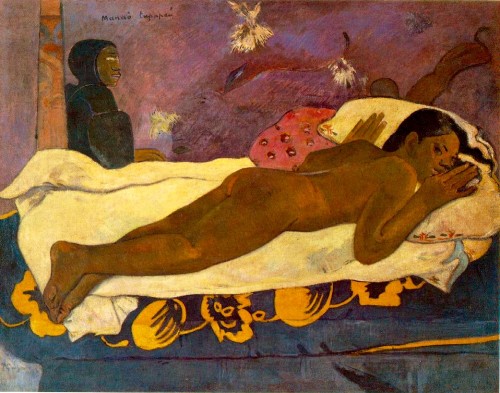
“Spirit of the Dead Watching”, 1892
Gauguin (1848-1903)
Gauguin was a brilliant artist who is called The Father of Modern Art. He was also a pretty nefarious character deserting his wife and children so he could live in “ecstasy, calmness and art” on the island of Tahiti.
In the above painting, notice the sinister figure in the background. Kinda scary, huh? But, oh, what gorgeous color!
_______________
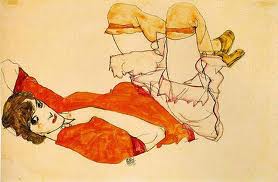
“Wally with a Red Blouse”, 1913
Egon Schiele (1890-1918)
A melancholy eccentric, Egon Schiele (Austrian), often drew his models from the top of a ladder looking down capturing unusual, arresting compositions.
Look at the contorted, twisted figure in Egon Schiele’s drawing. The expression on the face is…confused? Angry? Sad? Yet the figure has a certain innocence and the combinations of color are thrilling!
These images of dark and light, negative and positive are indeed disturbing. But we are drawn to them. Could the artists be showing us life in all its mystery?
Art In 36 Seconds! “EAT AT ART” Award winning art video!
Click here if you are unable to view the video.
Produced by Kirby Kendrick and Tyler Jordan, www.theartoftylerjordan.com
Most Famous Art Show In The World
If you happen to be in Venice between June and November this year, you will find yourself in the midst of the most important art show in the world, the Venice Biennale. The Olympics of art.
Art from 88 countries fills the museums, the palazzos, the canal-fronted warehouses, and the small intimate gardens. It’s everywhere!
But, alas, perhaps you and I will not be in Venice this year. Don’t despair…we CAN experience it!
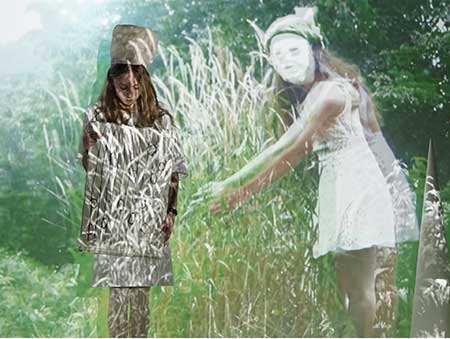
They Come To Us Without A Word
Joan Jonas
United States Pavilion
Lines are forming to see 79-year-old acclaimed artist Joan Jonas’ exhibit in the United States Pavilion. Jonas uses flashing videos of children playing, environmental elements, mirrors (made in Murano, Italy, famous for its glass-making) and storytelling. The multi-media exhibit, an homage to nature, art and music, is a blockbuster!
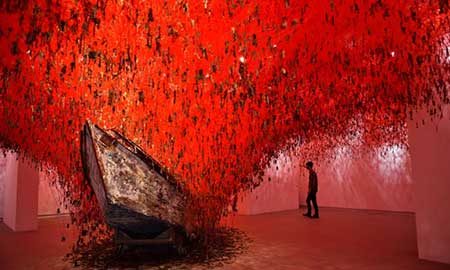
The Key in the Hand
Chiharu Shiota
Japan Pavilion
A huge, sensorial experience. Hundreds of keys attached to bright red yarn hang from the ceiling and transform the Japan Pavilion into an impenetrable jungle. The artist, Chiharu Shiota, feels keys not only lock and unlock physical spaces but memories as well.
Arrivederci Venice! Ciao!
Watch this short video, “Behind the Biennale: The World’s Most Famous Art Show”
Click here if you are unable to view the video.